Formal majlis and family majlis
Many villas in Dubai have two receiving rooms. The formal majlis is for guests, often near the entrance and sometimes with its own access, so visitors do not pass through the private parts of the house. It is designed to impress quietly: generous proportions, fine materials and careful symmetry.
The family majlis is used every day. It is more relaxed, closer to the kitchen and living areas, and has to cope with children, screens and long evenings. It can share a language of materials with the formal room, but it is planned around comfort and durability rather than ceremony.
Deciding early which room serves which purpose, and whether separate men’s and women’s majlis are needed, shapes the whole ground floor plan.
Seating layouts
Traditional majlis seating runs around the perimeter of the room, so every guest faces the centre and conversation flows across the space. A contemporary version keeps that principle with continuous upholstered seating or a set of sofas arranged in a U or a square.
Seat depth, cushion firmness and back height matter more here than in a living room, because guests sit for long periods. Low side tables within reach of every seat, and clear routes for serving, are part of the layout from the start. Bespoke seating made to the exact dimensions of the room avoids awkward gaps at the corners.
Materials: textile, stone, onyx and walnut
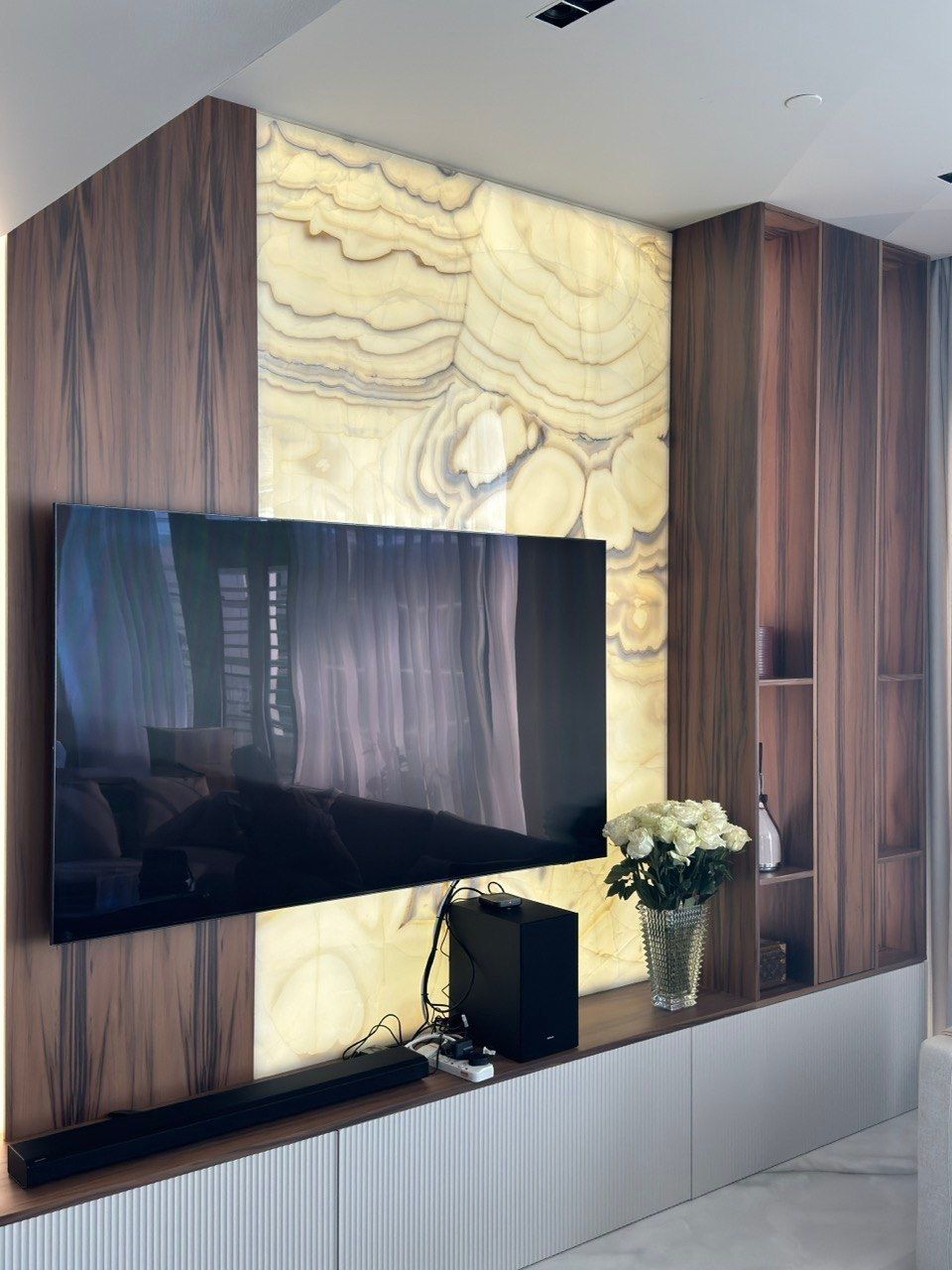
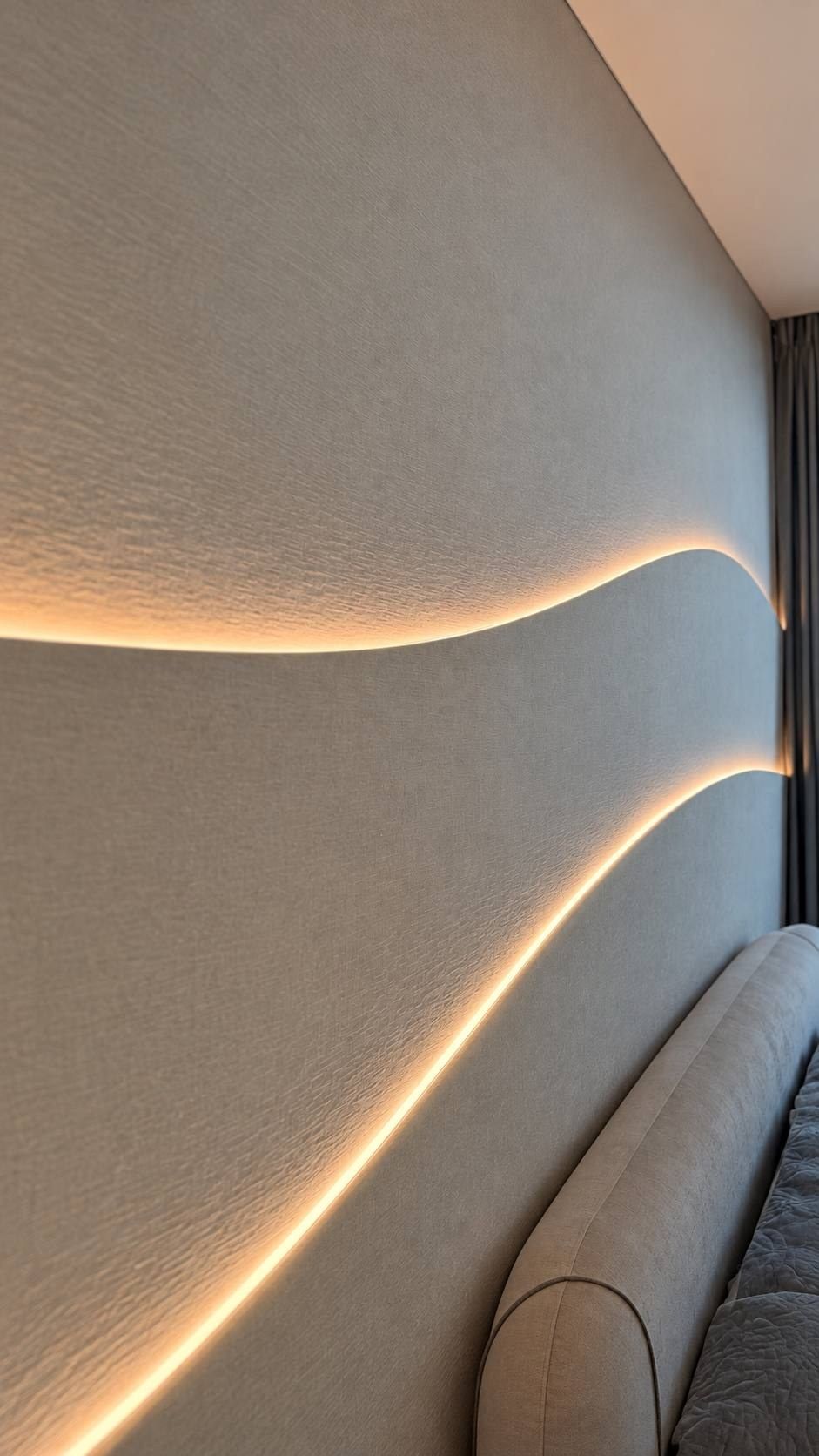
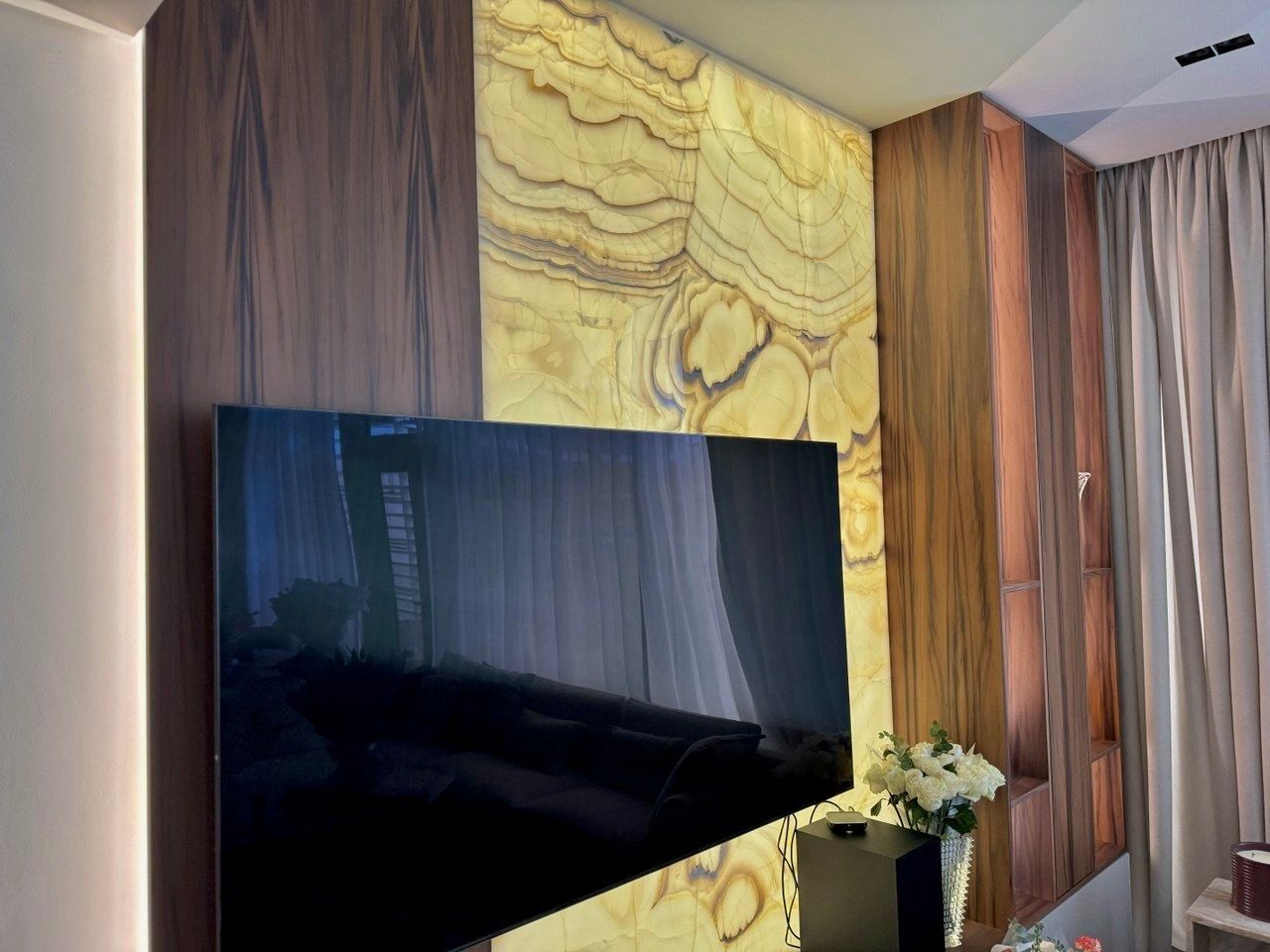
Architectural textile walls bring softness and sound absorption, and they give a seamless backdrop for lighting lines. Natural stone on the floor and on feature walls adds weight and coolness. Backlit onyx, used on a single wall or a serving counter, gives a warm glow in the evening.
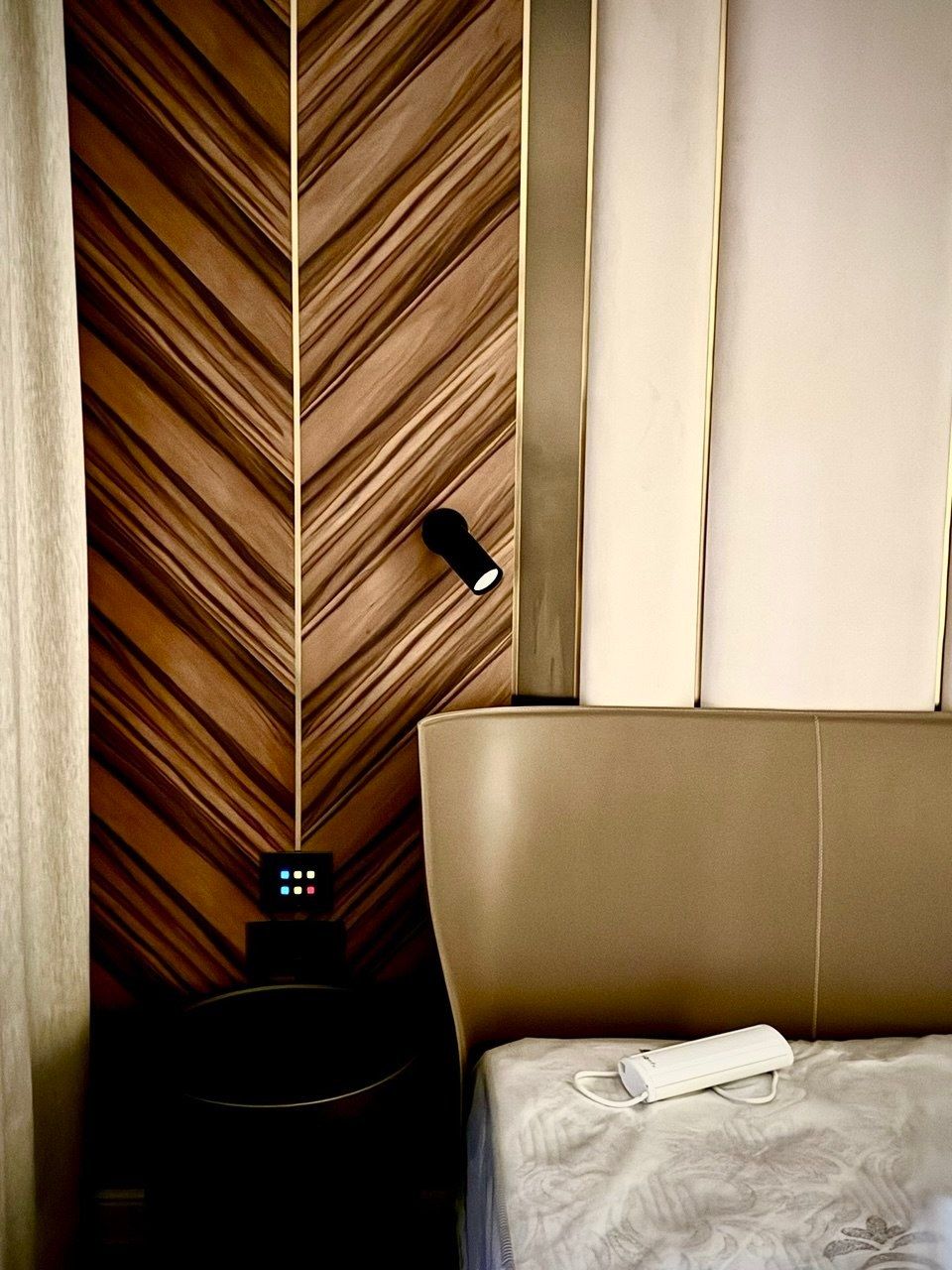
Walnut and other dark veneers suit panelling, doors and display joinery, and pair well with brass or bronze details. The skill is in restraint: two or three main materials, repeated with care, read as more refined than a room where every surface competes.
Samples of wood, stone and textile wall fabrics can be compared side by side at our showroom before the scheme is fixed.
Lighting scenes
A majlis is used at different times and for different occasions, so it needs more than one lighting setting. A welcome scene for arriving guests, a softer conversation scene, a brighter setting for serving and cleaning, and a late evening scene with only indirect light are a useful starting point.
Indirect light from coves, LED lines in textile walls and backlit stone provides the atmosphere. Discreet downlights or adjustable spots pick out art, calligraphy or a coffee station. A lighting control system lets the host change the mood with a single button.
Acoustics and comfort
Large rooms with stone floors and hard walls can echo, which makes conversation tiring when the room is full. Textile walls, upholstered seating, rugs and curtains all absorb sound. In formal rooms with marble floors, acoustic panels hidden behind fabric or within joinery keep the room calm without changing its look.
Sound also travels out of the majlis. Solid doors, good seals and careful placement of air-conditioning grilles help keep the rest of the house private when guests are visiting.
A full majlis on a summer evening generates a lot of heat. Air-conditioning should be sized for the room at its busiest and delivered quietly, with linear grilles or concealed diffusers that do not blow directly onto seated guests.
Incense and oud are part of hospitality in many homes, so good ventilation and fabrics that can be refreshed are worth planning for. Where screens are wanted for family gatherings or sport, a television can be hidden behind sliding panels or within joinery, so the formal character of the room returns when it is switched off.
Serving and storage
Hospitality depends on what you do not see. A pantry or serving station close to the majlis, with space for coffee, dates, incense and trays, lets staff or family serve without crossing the room. Concealed doors in panelling or textile walls keep the service route discreet.
Built-in storage for extra cushions, side tables, prayer mats and seasonal items keeps the room uncluttered. We design and make this joinery at our own production facility, so it fits the room and the wall finishes exactly.
Contemporary or traditional
A traditional majlis draws on geometric patterns, carved screens, rich textiles and floor seating. A contemporary majlis keeps the proportions and the spirit of welcome but simplifies the detail: cleaner lines, a calmer palette and modern lighting.
Many families choose a balance, such as a contemporary room with one or two traditional elements, perhaps a mashrabiya-inspired screen or a patterned carpet. We develop the design with you and then build, furnish and light it as one project.